



From Emergency Call to Maintenance Partner
From Emergency Call to Maintenance Partner: What a Davis Industrial PM Program Actually Covers
A lot of plants know Davis Industrial as a phone number to call in case of emergency.
That's not a complaint — we've earned it. Our emergency line is answered 24/7/365, and there's a real satisfaction in being the call that gets a system running again. One customer told us a ship couldn't sail until we finished a repair. We're proud of that.
But being the company you call when something breaks is a smaller relationship than we'd like to have with the plants we serve. The better version is the one where we know your system well enough that the emergency call doesn't need to happen.
That's what a preventative maintenance program is. Here's what's actually in one.
What we inspect
"Preventative maintenance" means something slightly different at every company that offers it, which makes it hard to evaluate. So here's our list, in plain terms.
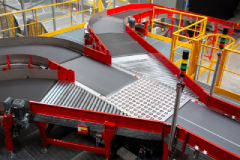
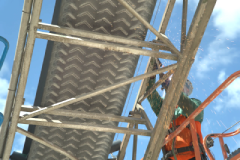
The conveyor. Belt condition, tracking, splices, cleaners, skirting, and lagging. This is the part everyone expects, and it's where most of the visible symptoms show up — spillage, carryback, mistracking, edge wear.
Rotating components. Pulleys, idlers, bearings, and gearboxes. These are the ones that give the least warning. A bearing announces itself acoustically and thermally before it seizes, but only if somebody is listening and checking. When one lets go without warning, the collateral damage is usually worse than the component itself.
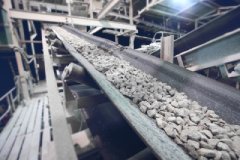
The material path. Chutes and transfer points. In our experience, a disproportionate share of the recurring findings in any plant trace back to a transfer point that was designed for a different material than what's running through it today. Suppliers change. Blends change. Moisture content changes seasonally. The chute doesn't.
Guarding and safety devices. Pull cords, belt alignment switches, zero-speed switches, guards and covers. This section deserves more attention than it usually gets, because safety devices degrade quietly — the most common finding isn't a broken guard, it's a guard that came off for a repair three months ago and never went back on.
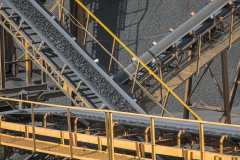
The rest of the system. Vibrating equipment, screw conveyors, bucket elevators, and dust collection. Conveyor maintenance that stops at the belt line misses the equipment feeding it and the equipment it feeds.
We also handle component lubrication as part of scheduled service — including automated lubrication systems where they're installed.
What you get back
Every visit produces a written report with photographs. That report covers what was inspected, what was adjusted or repaired during the visit, and what was found that needs attention later.
The key word in that last part is prioritized. A findings list that treats every item equally isn't useful to anyone managing a budget — you need to know what requires a purchase order this quarter, what can be scheduled for the next planned shutdown, and what's simply worth watching. Our reports rank recommended repairs so the decision is a decision, not a research project.
Over several visits, those reports become something most operations don't have: a documented wear history for the system. Which components consume the most parts. Which transfer points generate the most findings. Which conveyors quietly absorb the most maintenance hours.
That's the shift from estimating next year's maintenance spend to forecasting it — and it also surfaces root causes. When the same transfer point produces findings visit after visit, that's not a maintenance problem, that's an application problem. Worth solving once rather than servicing forever.
How scheduling works
Plans are built around your operation, not ours. Frequency depends on material abrasiveness, run hours, environment, and how critical each line is to production — a near-continuous line handling abrasive material needs more attention than an intermittent one moving finished goods.
For belt cleaner maintenance specifically, we offer a defined program: the MCPP (Material Control & Performance Program). It's a one-year agreement with bi-monthly or quarterly visits covering inspection, blade tension and position adjustment, and blade replacement with labor included — which removes the most common reason blade changes get deferred, namely that nobody wants to schedule a service call for a small job. MCPP members also receive preferred pricing on wear parts and cleaner assemblies, with additional incentives available for multi-plant operations.
Broader full-system plans are scoped from the site walk.
Who this is for — and who it isn't
A program tends to be a strong fit where maintenance staffing is tight and small recurring jobs get deferred, where documentation is needed for internal or regulatory reporting, or where budget planning would benefit from predictable scheduled service instead of variable emergency spend.
It's a weaker fit for operations with a fully staffed in-house crew already doing this work on a documented schedule. If that's you, we'll say so during the site walk rather than after you've signed something.
Why Davis
We're a full-service conveyor solutions company, not a manufacturer. We distribute and service best-in-class partner brands and bring the application expertise to match the right component to your material and your system. That matters in maintenance, because sometimes the finding isn't "this part is worn" — it's "this application changed, and the component should change with it."
We also run a full in-house fabrication shop with certified welders, so when the part you need doesn't exist off the shelf, it doesn't become a lead time problem.
And the emergency line stays on. Being your maintenance partner doesn't mean we stop answering at 2 AM. It means you need us to a lot less often.
Start with the walk
Every program starts with a free site walk. A solutions specialist walks your system with you, assesses condition, and gives you a written read on what they find — including what's in good shape.
If a program makes sense, we'll scope it. If it doesn't, we'll tell you that instead.
Schedule your free site walk at conveyors247.com, or call 813-247-3620.
Internal links: /services/preventative-maintenance-programs · /services/conveyor-belt-inspection-troubleshooting · /services/automated-lubrication-systems · /services/emergency-services · /services/industrial-fabrication-welding · /contact